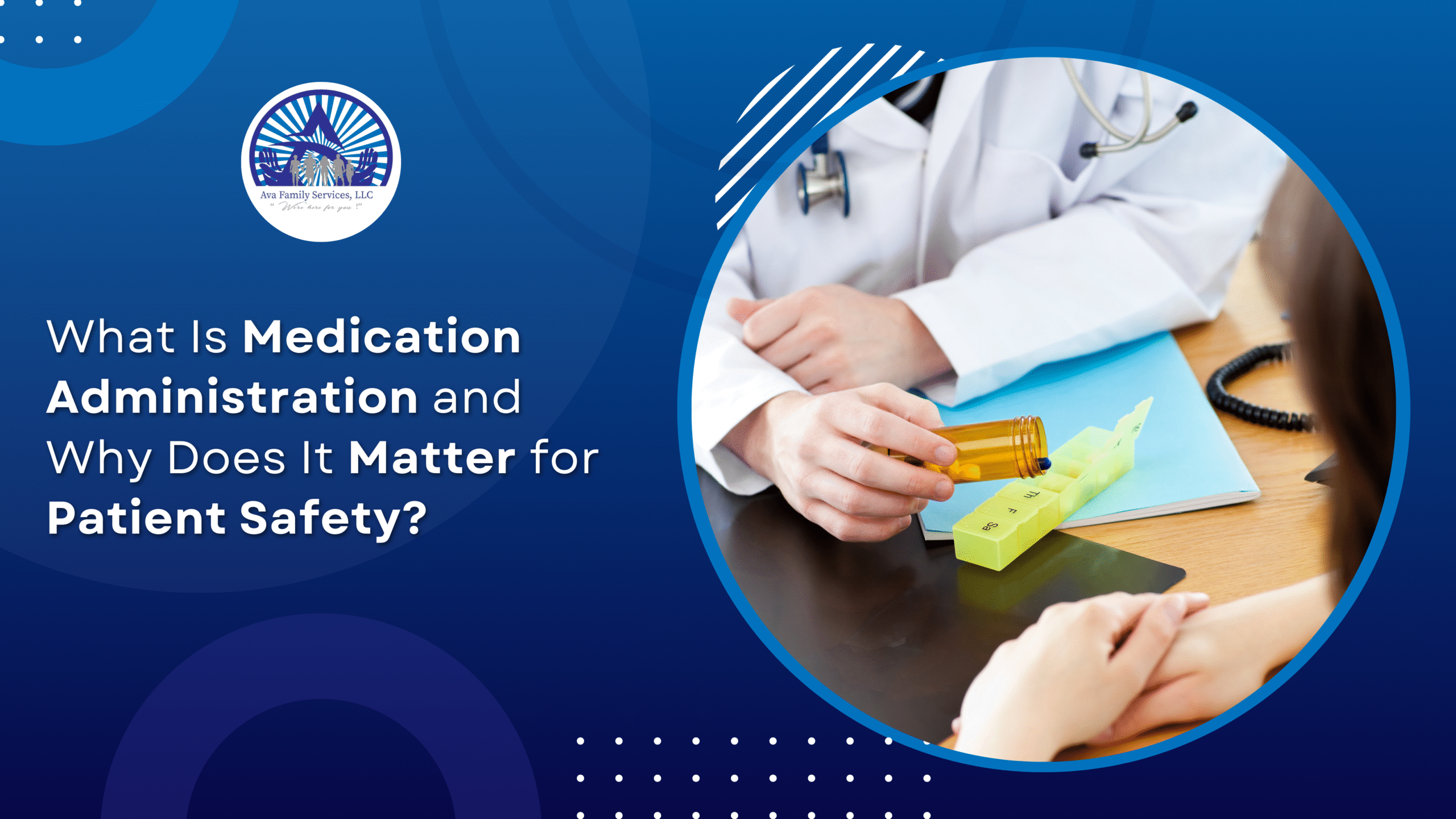
Medication administration involves providing the correct medication to the appropriate individual at the designated time. It also means giving the right dose in the right way. This sounds simple, but it must be done very carefully. Small mistakes can make a child sicker. That is why safe medicine use matters.
What Is Medication Administration?
Medication administration is when a nurse or caregiver helps a child take medicine. This can be by mouth, through a tube, or through a syringe. It can be a pill, liquid, inhaler, or injection. The person giving medicine must know:
- The child’s name,
- The medicine name,
- The amount to give,
- When to give it,
- How to give it safely.
Why Medication Safety Matters
Medicines help heal. They stop pain, calm breathing and fight infections. But medicines can cause harm if they are used the wrong way. Wrong dose. Wrong time. Wrong medicine. Each can be dangerous.
Children with special needs may take many medicines. Some have tracheostomies or ventilators. Some need help with daily tasks. These children need very careful care. Safe medicine use keeps them healthy and helps families feel calm.
Who Is Responsible for Giving Medicine?
Trained nurses and caregivers usually give medicines. Parents often help too. At Ava Family Services, we send skilled nurses or trained personal care staff to the home. These team members know how to give medicine safely. They know how to watch for bad reactions. They document every dose given.
Common Risks with Medication
Here are ways medicine can cause problems:
- Mix-ups: Two medicines with similar names can be confused.
- Wrong dose: Too much or too little can be harmful.
- Wrong time: Missing a dose or giving it too close to another dose can be bad.
- Wrong route: Giving a pill instead of an injection changes how the medicine works.
- Allergic reaction: A child can become very sick if they are allergic to a medicine.
Knowing these risks helps caregivers prevent them.
How We Keep Medicines Safe at Home
We follow simple steps to keep children safe. These steps are used by our nurses and caregivers every day.
- Check the Five Rights. Right child, right medicine, right dose, right time and right way.
- Use clear labels. Medicine bottles have the child’s name and instructions.
- Store medicines safely. We keep them where children cannot reach them. We follow the storage rules on each label.
- Double-check with a second person when needed. For high-risk medicines, two trained staff members check the dose.
- Watch the child after giving medicine. We look for side effects and tell the parent right away.
- Write it down. We record every medicine given. This avoids repeat doses or missed doses.
- Report and learn from mistakes. If a mistake happens, we report it and fix the plan so it does not happen again.
Simple Steps Families Can Take
Families are part of the safety team. Here are easy ways parents can help:
- Keep a list of all medicines and doses.
- Show the list to every caregiver.
- Store medicines in a locked box if possible.
- Ask the nurse to explain each medicine in simple words.
- Tell the care team about allergies or past reactions.
- Keep medicine labels and prescriptions safe.
- Count pills together when a new bottle is opened.
These steps are easy but very helpful.
How Communication Keeps Children Safe
Good talk is very important. Nurses talk to doctors and parents. We share when a child gets better or worse. We ask questions if a dose seems wrong. We use simple words so parents can understand. Clear notes and daily reports help everyone stay on the same page.
What to Do If Something Goes Wrong
If you think a wrong dose was given, act fast:
- Stay calm.
- Call the nurse or doctor right away.
- Follow their instructions.
- If the child is having trouble breathing, call emergency services.
- Tell the care team the exact time and what happened.
Quick action can prevent harm.
How Ava Family Services Helps
We care for children and young adults under 21. Many of our clients have special medical needs. We help those with spinal muscular atrophy, cerebral palsy, brain injuries, ventilator care and more. Our services include skilled nursing and personal care assistance at home. For families who are eligible for Medicaid, these services are free.
Here is how we help with medication safety:
- We train our nurses in safe medication administration.
- We give in-home care, so medicines are given where the child is most comfortable.
- We support hospital-to-home transitions. This means we help when a child moves from the hospital back to home care. We check all medicines at that time.
- We help caregivers learn to give medicines safely.
- We offer personal care assistance for daily tasks and activities.
Our goal is to keep each child safe at home. We want parents to feel calm and confident. We work with doctors and therapists so the care plan fits each child.
The Big Idea
Medication administration is a small act that makes a big difference. It protects health. It keeps children safe at home. When nurses, caregivers and families work together, medicine helps more and harms less.
Final Words
At Ava Family Services, we know every child is special. We treat them with care, respect and skill. We help families with safe medicine use. If you have questions about medicines, call us. We will explain things in plain words. We will come to your home and help. Your child’s safety is our first job.
FAQs
Can Ava Family Services help with medicines?
Yes. We send trained nurses to the home and help with medicine plans. For those who qualify for Medicaid, our in-home care is free.
How will I know what medicines were given?
We write down each dose and tell you. You can ask us anytime.
No comment